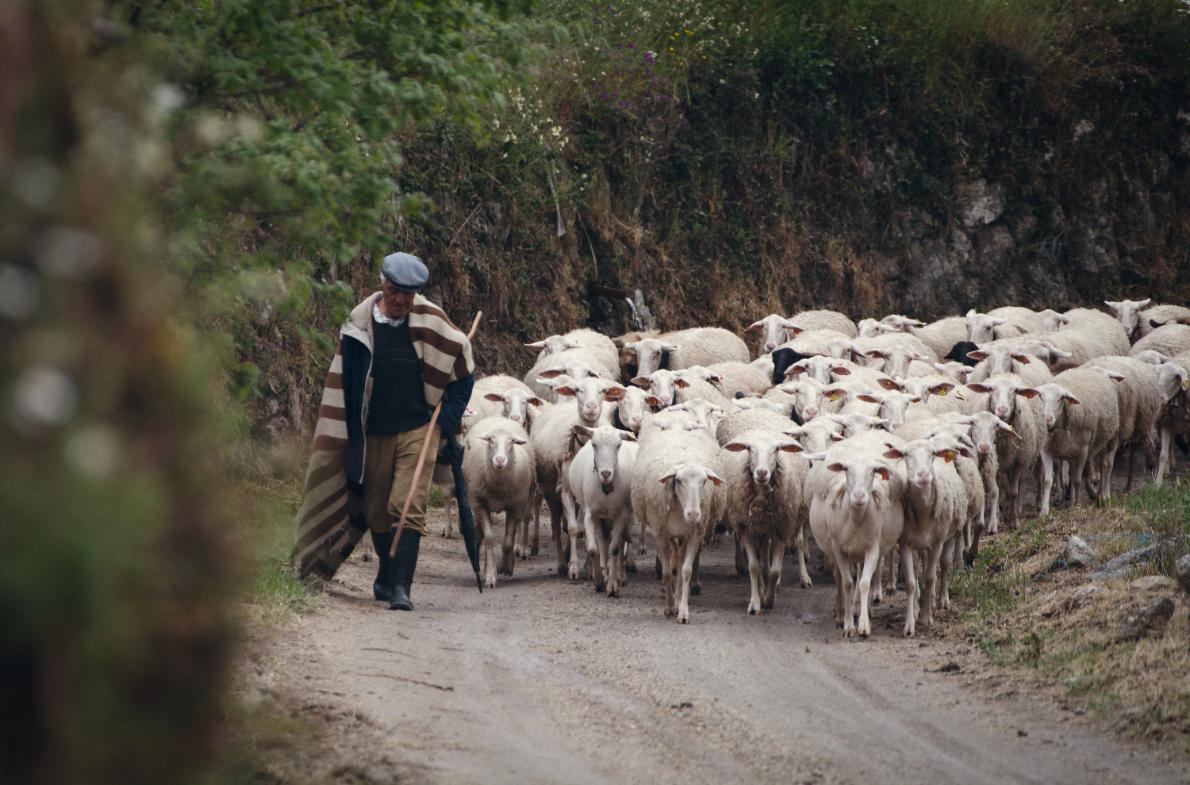
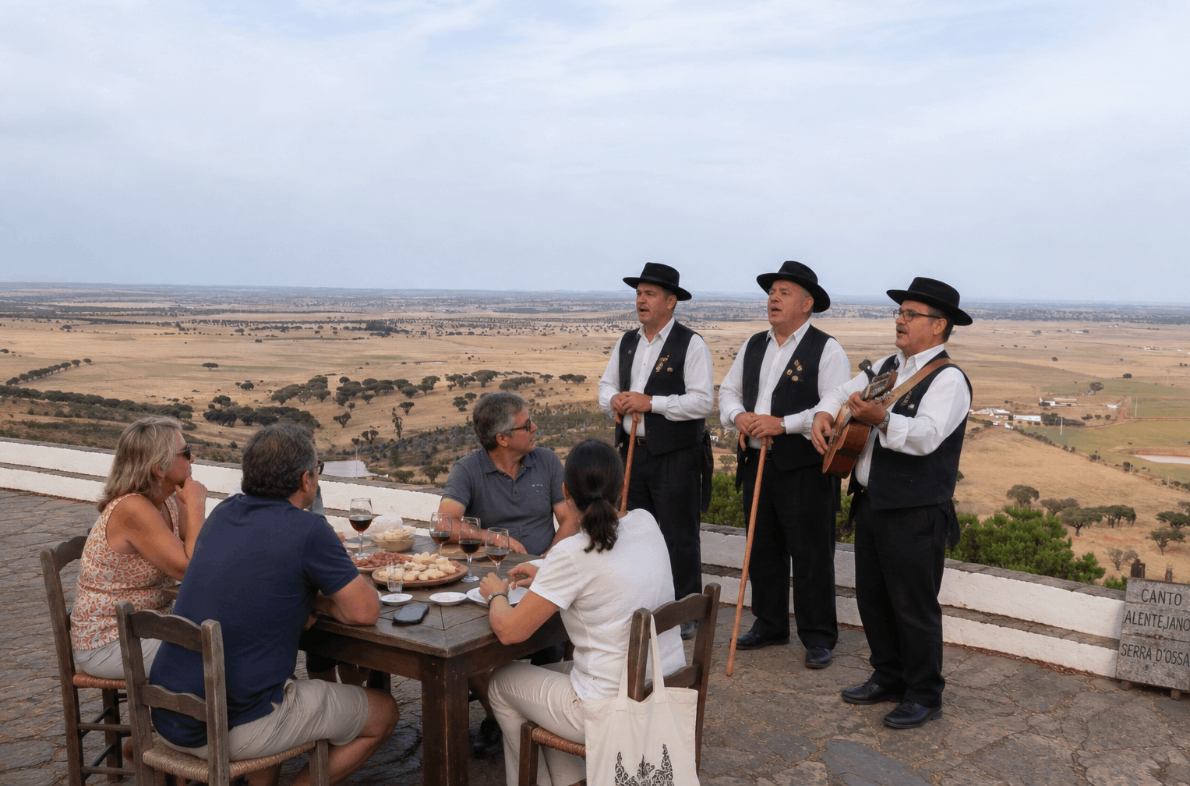
It is surprisingly difficult to explain Alentejo to someone who has never been there. Many travellers discover Alentejo through private tours in Portugal and quietly describe it as one of the country's most authentic regions, although the feeling is difficult to summarize in a few words. Most descriptions begin with the most visible elements: vineyards stretching across the horizon, whitewashed villages, olive groves, cork trees, and long, empty roads crossing vast plains beneath enormous skies.
But none of this fully explains what it feels like to be there. Because Alentejo is not really a place that reveals itself immediately. It settles in slowly, almost quietly. Sometimes people only fully understand what they experienced there once they are back home. The pace changes first, reflecting the principles of slow travel in Portugal. Lunch stretches naturally into the afternoon. Conversations stop feeling rushed. During long drives across Alentejo, there are moments when almost nothing seems to happen — just light, landscape and silence. At first, that silence can feel unfamiliar. Then gradually it becomes comforting. Almost necessary.
That kind of space is becoming rare now, especially in Europe. And perhaps that is why so many travellers end up describing Alentejo as Portugal’s most authentic region. Not because it is untouched — nowhere truly is anymore — but because life here still feels like it belongs to itself. Tourism exists, of course. Beautiful sustainable luxury accommodation, exceptional wine, remarkable restaurants. But the region never feels entirely designed around visitors.
That distinction quietly changes the entire experience of being there. In many villages across Alentejo such as Monsaraz, afternoons still move slowly enough for church bells to carry through empty streets. Older men sit outside cafés watching the day unfold. Bakeries open early, shops close for lunch, and neighbours stop in the middle of the road for conversations that do not seem to be in a hurry. None of this feels staged. And perhaps that is exactly what stays with people.
Why are villages in Alentejo so authentic?
It is rarely the most famous places that define Alentejo, but rather small villages like Monsaraz, Marvão or Castelo de Vide that are undeniably beautiful. But what tends to stay with people is rarely just the beauty itself. It is usually the atmosphere. The feeling that these villages still belong, first and foremost, to the people who actually live there.
In many destinations today, historic centers have become almost too polished — visually beautiful, certainly, but somehow disconnected from everyday life. Alentejo feels different from that. A laundry line hanging between two windows. The smell of fireplaces on winter evenings. A man slowly sweeping the pavement outside his house before sunset. Small details, really. But these are often the moments travelers remember months later.
Not monuments. Not museums. Just ordinary scenes that felt unexpectedly genuine. And perhaps that is becoming a form of luxury in itself — not exclusivity in the traditional sense, but access to places that still feel emotionally honest. For travelers seeking an unspoiled Portugal beyond mass tourism, villages in Alentejo often leave a stronger impression than larger and more famous destinations.
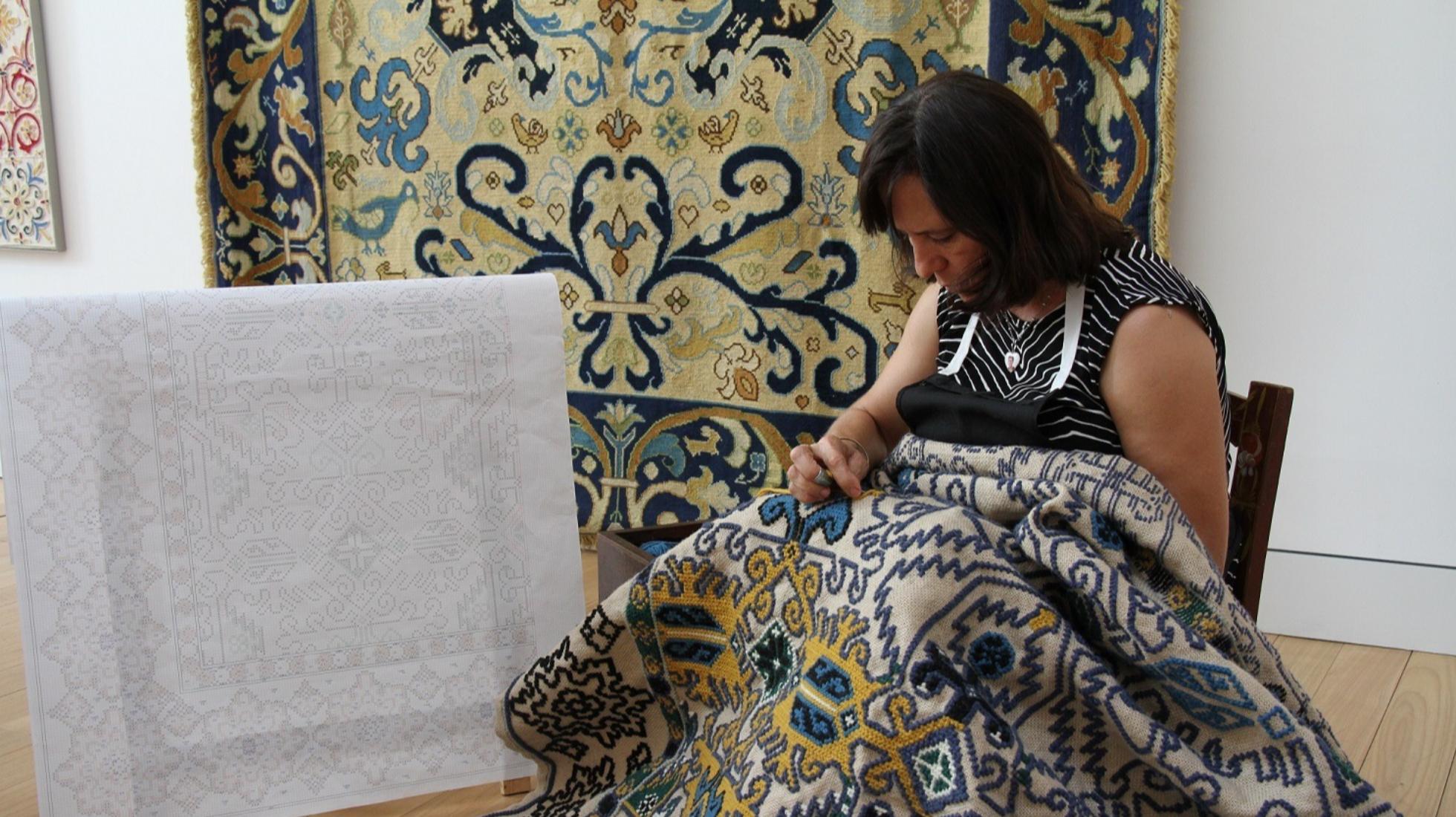
Traditional craftsmanship still preserved in Alentejo.
Why do wine experiences in Alentejo feel so personal?
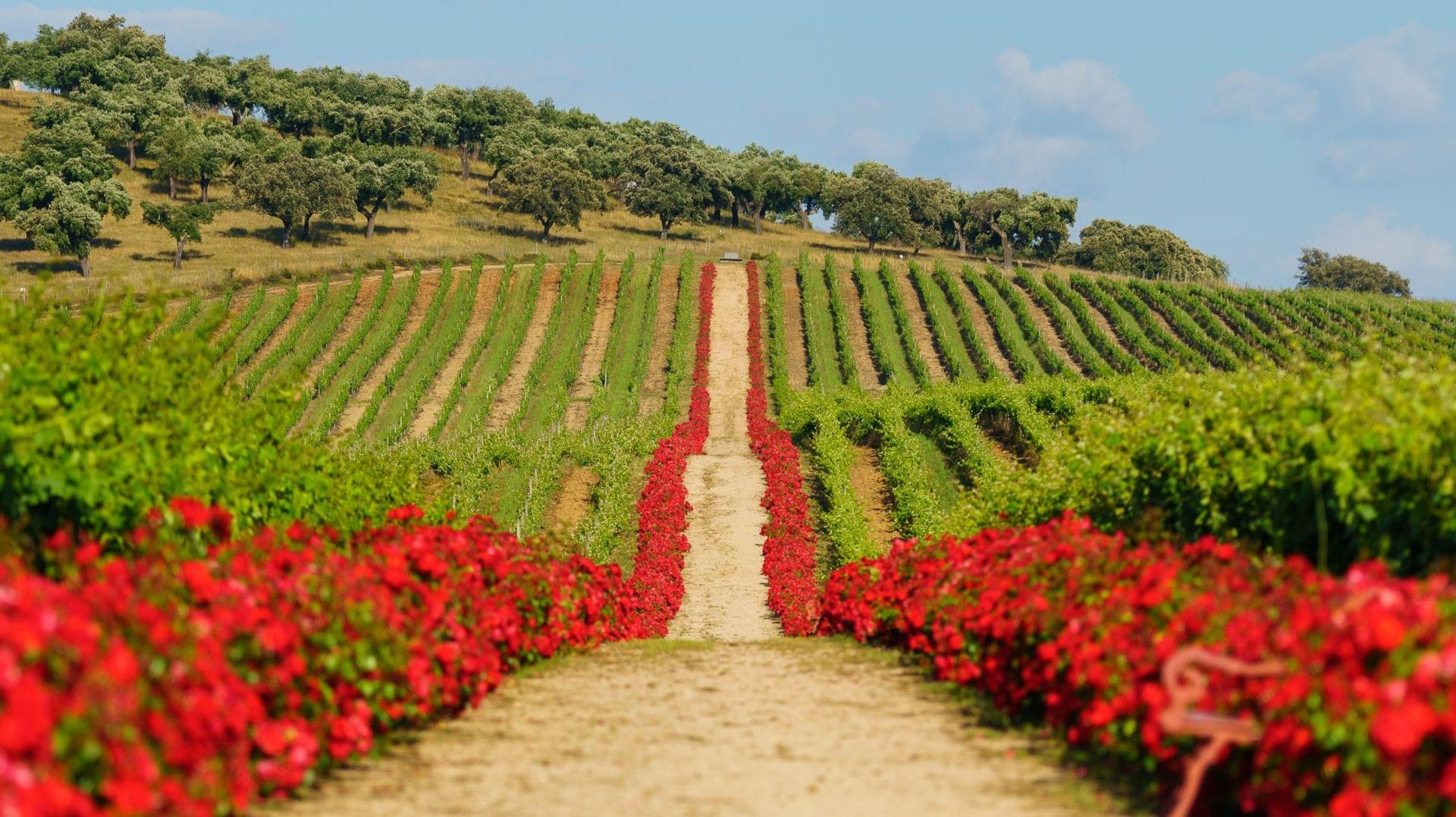
Some wineries in Alentejo are elegant and refined, naturally, but many still feel deeply personal. Tastings happen slowly. Nobody seems interested in rushing guests through five wines in twenty minutes before moving immediately to the next place. And this is exactly why wine experiences in Alentejo feel so personal. There is time to stay. Time to keep talking. Time to sit in silence for a moment, looking out across the landscape.
And often, it is that silence that lingers in memory long after the wine is finished. Late afternoon light over the vineyards has a softness that photographs never quite manage to capture. The plains seem endless. Near sunset, the silence becomes almost physical. People arrive expecting wine tourism. They often leave remembering stillness instead.
That slower, more intimate approach to wine experiences is part of what makes Alentejo feel so different from many of Europe’s more heavily commercialised wine regions.
Why food in Alentejo feels deeply connected to the land?
The connection between food and land in Alentejo becomes clear the moment you arrive. What you taste tells you immediately where you are — not through sophistication, but through identity. Bread, olive oil, coriander, sheep cheese, black pork, slow-cooked meats, and local wines. The cuisine was shaped by generations of rural life, by simplicity, by seasonality, and by necessity. Somehow, that simplicity became deeply comforting.
Meals still feel social here in the old sense of the word. Not optimised. The pace is unhurried. Lunch can quietly extend into the entire afternoon without anyone really planning for it. That rhythm initially surprises many American and Northern European travelers initially. Then, slowly, they begin to adapt to it. Phones remain untouched on the table for longer. Conversations drift naturally. People stop checking the time so often. Alentejo gently changes travelers in that way. Without announcing it.
Why do travelers leave Alentejo feeling different?
There are certainly more dramatic regions in Europe. More famous ones, too. But Alentejo remains in memory in a different way. Perhaps because the experience still feels emotionally coherent. The landscapes, villages, food, architecture, and people all seem connected by the same understated rhythm. Nothing demands attention.
In a world increasingly shaped by noise, stimulation, and urgency, that absence becomes surprisingly powerful. People rarely leave Alentejo feeling overwhelmed. Usually, they leave quieter and more observant. Sometimes, even slightly nostalgic for something difficult to explain. Maybe that's what authenticity really is. Not perfection, not performance. Just the sense that a place still belongs to itself.
Perhaps that is why Alentejo rarely feels like a place people simply “visit.” It becomes a place they continue to think about afterwards — in ordinary moments back home, often without fully understanding why. Perhaps that lingering feeling is precisely what thoughtfully designed tailor-made tours in Portugal are meant to leave behind. Long after the journey ends, many travellers realise that what they miss most about Alentejo is not a specific place but the slower version of themselves they became while they were there.
Related