Luxury travel has traditionally been associated with privacy, exceptional hotels and exclusive access. But there is another form of luxury that is becoming increasingly valuable: small group travel.
It is the luxury of having enough space for conversation, enough flexibility to follow a moment when it happens, and enough attention to notice the details that larger groups often pass by. The difference is not simply the number of people in the vehicle. It changes the way a journey unfolds.
What Actually Changes When You Travel in a Small Group?
A smaller group does something surprisingly simple: it makes interaction easier. There is a difference between listening to a guide address twenty people and having a conversation with a guide who can respond to your questions, interests and curiosity. In a small group, the experience can become less about delivering information and more about exchanging it.
Research into small-group communication has found that smaller groups can support higher-quality communication, while larger groups can take longer to reach decisions. For travellers, this has a practical consequence. Perhaps someone wants to spend another twenty minutes looking at a particular piece of architecture. Perhaps a conversation with a winemaker becomes unexpectedly interesting. Perhaps the group discovers that the best part of the morning was not the scheduled visit, but the person they met along the way.
A smaller group makes those moments easier to accommodate. It also changes the atmosphere. People speak more naturally. Questions are less likely to be left unasked. And the guide has the opportunity to understand not only what travellers want to see, but what genuinely interests them. That is a very different experience from simply moving through a destination.
Why Do Small Groups Create More Meaningful Travel Experiences?
There is a psychological dimension to this that is easy to overlook. In a large group, conversation naturally becomes more difficult to manage. Research on conversational group size has found that larger groups can spontaneously divide into smaller conversational clusters, meaning that not everyone participates equally. In a smaller group, there is less distance between people. That matters when travel involves participation rather than observation.
Why do people connect more easily in smaller groups?
When there are fewer people around a table, in a workshop or walking through a village, conversation can develop naturally rather than being directed from one person to many. The result can be a more genuine exchange between traveller, guide and host.
Why do we remember participatory experiences more strongly?
A journey is rarely remembered as a list of places visited. We tend to remember moments in which we were involved: shaping something with our hands, tasting something while hearing its story, asking a question that led somewhere unexpected. Small groups make these forms of participation easier to create.
Can travelling together create stronger connections?
It can. Shared discovery creates a common memory — not simply what we saw, but what happened to us there. That distinction becomes particularly important for couples, families and friends travelling together.
Small Group, Authentic Experiences
Why Is Portugal Particularly Suited to Small Group Travel?
Portugal's scale is part of its appeal. Within relatively short distances, the landscape, architecture, food traditions, and ways of life can change considerably.
But the real advantage of travelling in a small group is not simply being able to cover more ground. It is being able to enter places where the experience depends on human interaction.
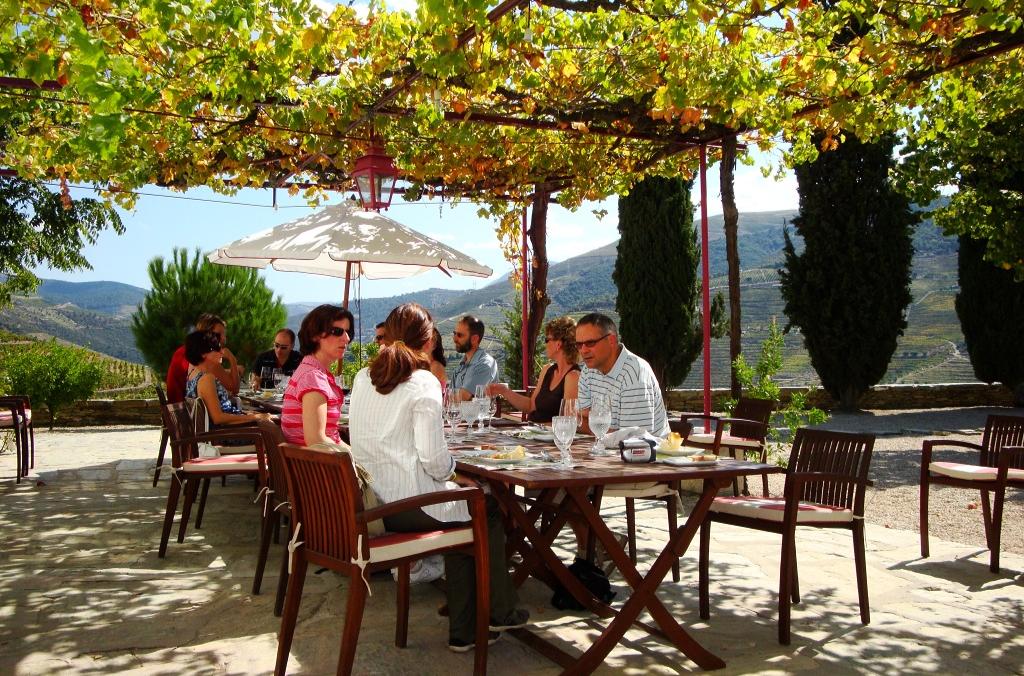
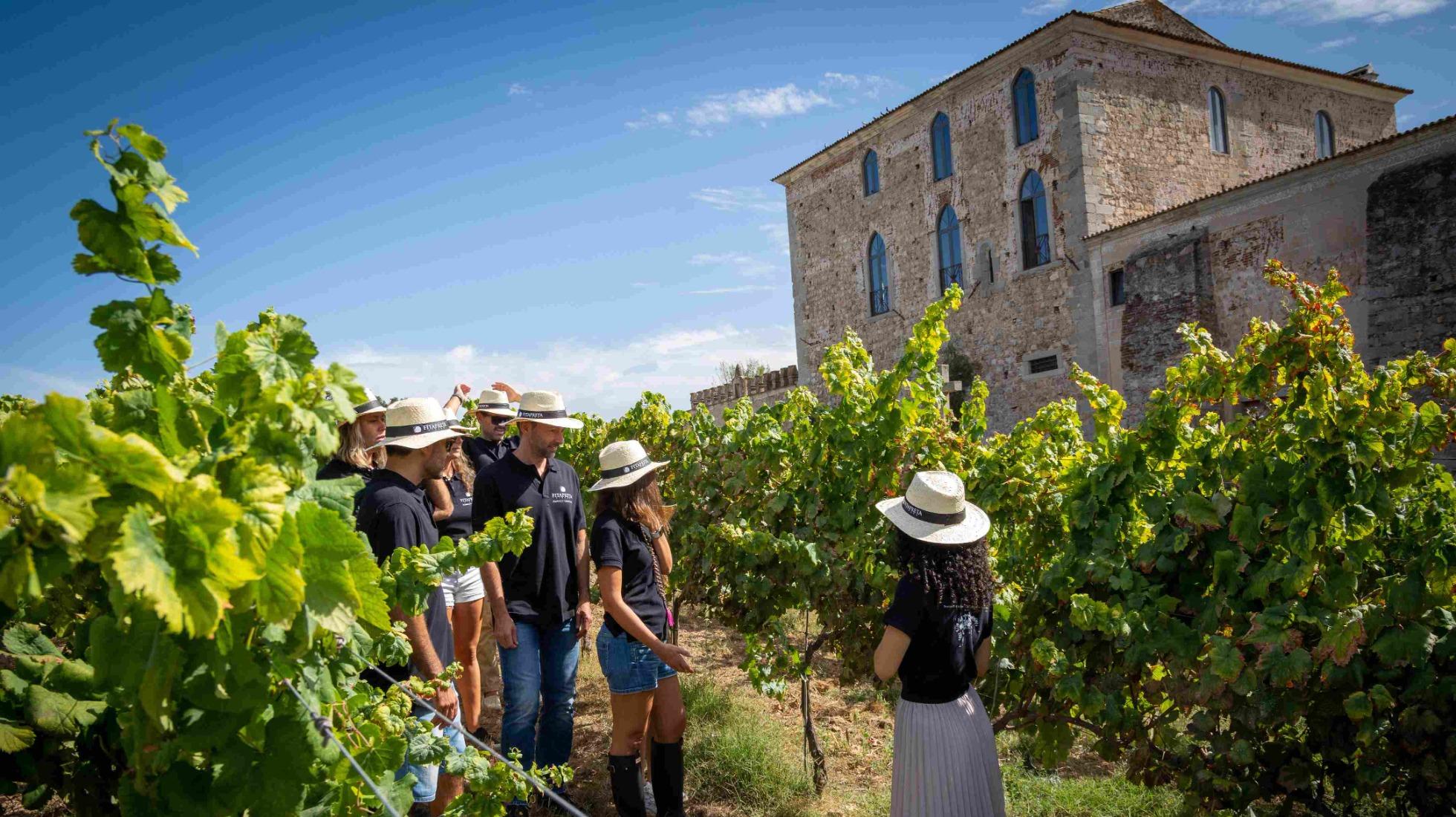
A family-run winery, for example, is not necessarily interesting because it is small. It becomes interesting when the person making the wine has time to explain why a particular vineyard is different, how the landscape has shaped the wine, or what has changed over generations.
The Douro is a good example. Its terraced vineyards are not simply a scenic backdrop; they form part of a cultural landscape shaped by centuries of viticulture. UNESCO describes the Alto Douro as a cultural landscape in which vineyards, settlements, quintas, and the river are deeply interconnected.
A small group can experience that landscape differently when there is time to stop, ask questions, and listen.
The same principle applies beyond wine: a pottery workshop, an olive oil producer, a traditional kitchen, or a rural community can become much more personal when the interaction is not designed around moving a crowd through a schedule.
For Immersive Journeys, this is one reason we favour experiences where people are not simply shown something but are given the opportunity to understand the person, place or tradition behind it.
What can small groups experience that larger groups cannot?
Some experiences simply work differently when there are fewer people involved. A conversation with a producer, a hands-on craft workshop or a meal around a family table leaves more room for participation and spontaneity.
The value is not in seeing something exclusive for the sake of exclusivity. It is in having enough space for the encounter itself to develop.
Why do family-run producers work better with smaller groups?
Small producers often have limited time and space. A visit is more meaningful when the host can speak directly with travellers rather than addressing a crowd.
This creates an exchange rather than a presentation—questions can be answered, stories can emerge, and travellers can understand the tradition behind what they are tasting or seeing.
How does group size change the way you experience a destination?
A smaller group can move through a place with less disruption and greater awareness. There is more opportunity to pause, observe, and respond to what is happening around you.
In Portugal, where many cultural experiences are rooted in small-scale production and personal relationships, that difference can be particularly noticeable.
Is Small Group Travel Better Than Private Travel?
Not necessarily. They answer different needs. A small group tour can be ideal for travellers who enjoy sharing discoveries with a few other people while still wanting a more personal atmosphere than a large organised tour can provide.
When is a small group tour the better choice?
It can suit travellers who value social interaction, shared experiences and the reassurance of travelling with a knowledgeable guide, without being part of a large group.
When is private travel worth choosing instead?
Private travel becomes particularly valuable when the itinerary needs to revolve entirely around the travellers themselves — their interests, preferred pace, dietary needs, mobility considerations or particular cultural passions.
For a family travelling across Portugal, for example, a private journey can allow parents and children to experience the country together without having to compromise their day around the preferences of strangers.
At Immersive Journeys, our journeys are private and tailor-made, and many are designed for couples, families or small groups of friends travelling together. The emphasis is therefore not on adding people to a group, but on creating enough space for the people travelling to experience Portugal in their own way.
FAQ: Small Group Travel
What is considered a small group tour?
There is no universal definition, but luxury small group travel generally means a significantly smaller group than conventional coach tours, allowing more personal interaction and flexibility.
Is small group travel worth it?
For travellers who value personal interaction, local knowledge and a less structured group experience, the additional cost can translate into greater access, attention and quality of experience.
Is small group travel better than private travel?
Not necessarily. Small group travel offers shared discovery, while private travel provides greater control over the itinerary and who you travel with.
How many people should be in a luxury small group?
There is no ideal number for every journey. What matters is whether the group is small enough for genuine conversation, participation and flexibility to remain possible.
Related